
Dieser Artikel stammt aus dem Jahr 2021. Versionen, Werkzeuge und Empfehlungen können sich seitdem geändert haben. Neuere Beiträge findest du unter .NET.
Standardmäßig wird der Referer, also die Quelle des Aurufs des HTTP-Requests, nicht von der Application Insights Middleware des ASP.NET SDKs gespeichert.
Um dies dennoch im Log zu hinterlegen, muss ein eigener ITelemetryInitializer geschrieben werden.
 1    public class HttpRefererTelemetryInitializer : ITelemetryInitializer
 2    {
 3        private readonly IHttpContextAccessor _httpContextAccessor;
 4
 5        public HttpRefererTelemetryInitializer(IHttpContextAccessor httpContextAccessor)
 6        {
 7            _httpContextAccessor = httpContextAccessor;
 8        }
 9
10        public void Initialize(ITelemetry telemetry)
11        {
12            if (telemetry is RequestTelemetry requestTelemetry)
13            {
14                requestTelemetry.Context.GlobalProperties.Add("Url-Referer",
15                    _httpContextAccessor.HttpContext.Request.Headers["Referer"]);
16            }
17        }
18    }
Dieser muss anschließend noch registriert werden
services.AddSingleton<ITelemetryInitializer, HttpRefererTelemetryInitializer>();Related articles
- 17 min read
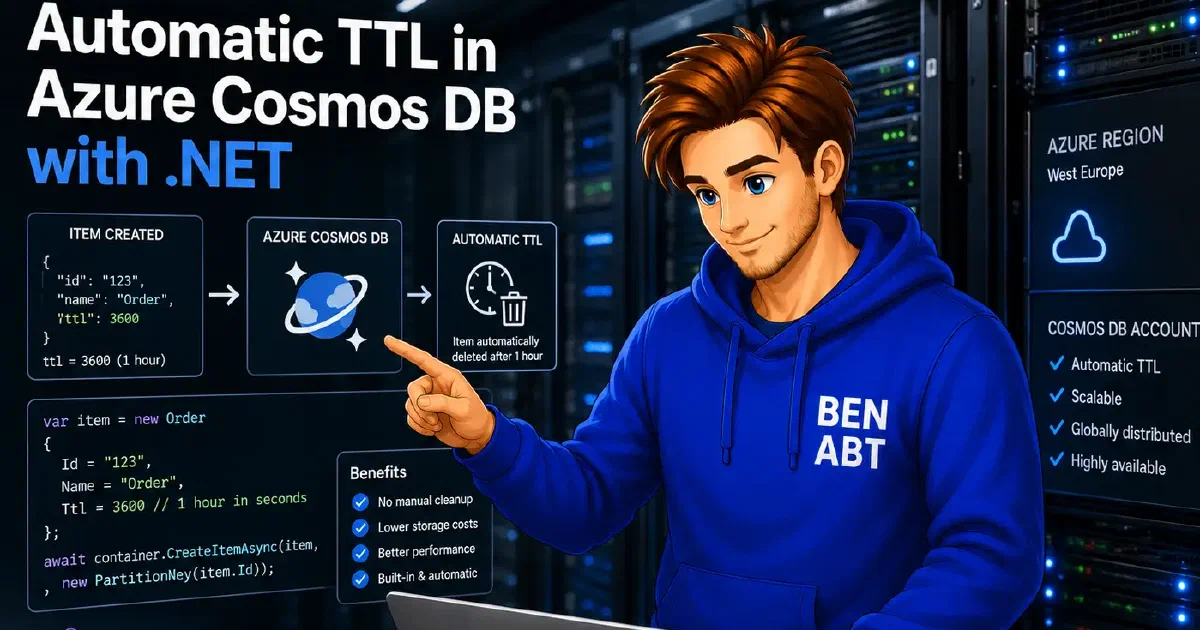
Automatic TTL in Azure Cosmos DB with .NET
Temporary data is easy to create and surprisingly difficult to remove reliably. Sessions, idempotency keys, import buffers, transient …
- 11 min read
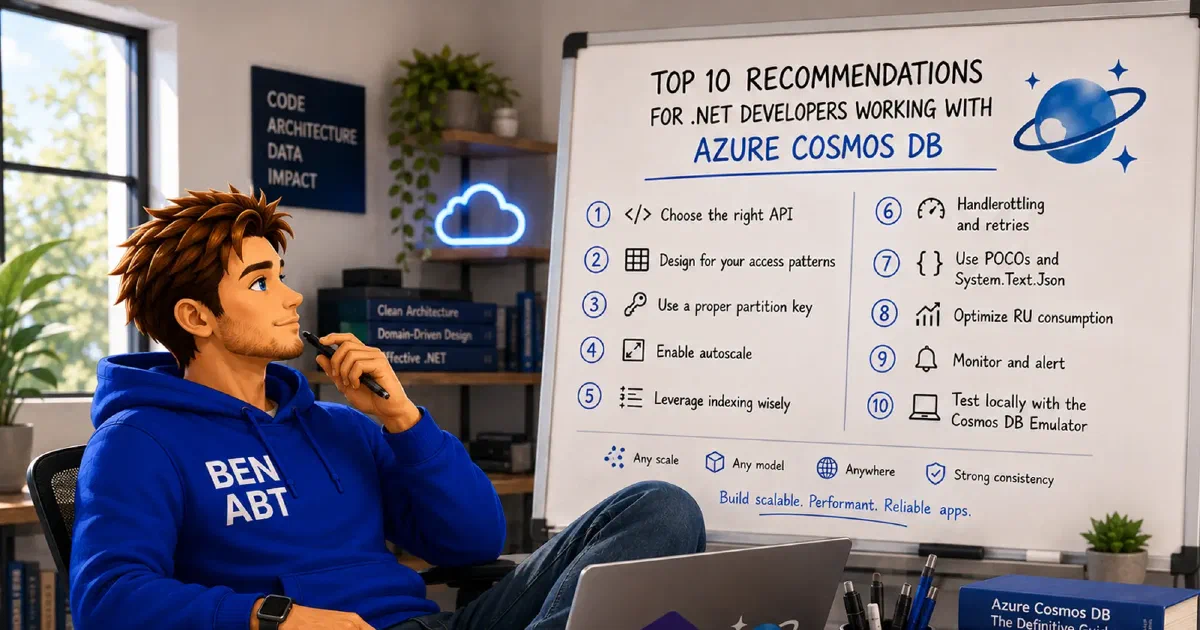
Top 10 recommendations for .NET developers working with Azure Cosmos DB
Azure Cosmos DB has a habit of exposing architectural weaknesses very early. Classic data-access patterns that work perfectly fine with …
- 14 min read
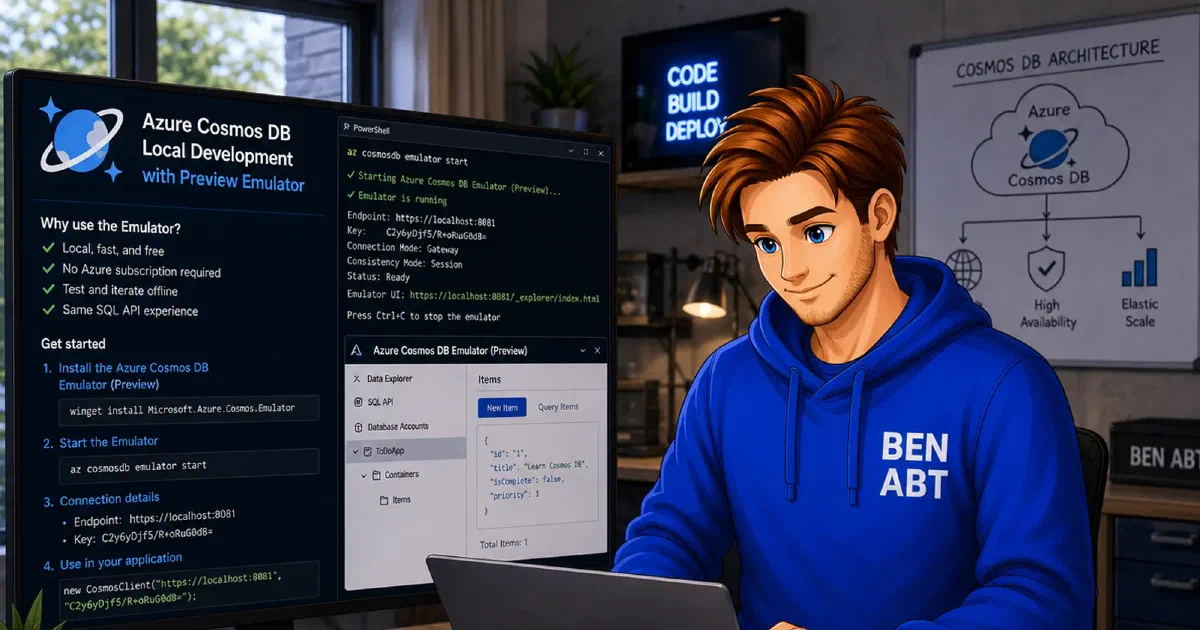
Local Aspire Development with Azure Cosmos DB and the Preview Emulator
Distributed applications tend to feel straightforward until a real cloud dependency enters the picture. Azure Cosmos DB is a good example. …

BEN ABT
Ben is Chief Engineering Officer and Principal Software Engineer at Medialesson.de, with a strong focus on .NET and Microsoft Azure. In his professional role, he designs and builds highly scalable platforms for hybrid and cloud-based scenarios. He also advises companies and C-levels on migrating to the sovereign cloud.
He runs myCSharp.de, the largest and most active German-speaking C# community forum, actively contributes to both his own and external open-source projects and regularly shares his knowledge through his blog, at community events, conferences and as a writer for technical magazines.
Let's Work Together
Looking for an experienced Platform Architect or Engineer for your next project? Whether it's cloud migration, platform modernization or building new solutions from scratch - I'm here to help you succeed.