
This article was written in 2023. Versions, tools and recommendations may have changed since then. Newer posts are collected under .NET.
September last year, Microsoft announced that a large number of backend services would be migrated to .NET 6. This, they said, was an enterprise-wide initiative .
Now, about half a year later, Microsoft delivers in a very detailed blog post that their expectations in performance, efficiency and scalability have been far exceeded by .NET 6. What was migrated was a permission service that still has its origins from the time of Skype from 2013.
- The performance advantage has been reduced by 50%: it is now 100%.
- The latency could even be reduced by 45%.
The migration was not entirely trivial. About 2 weeks were invested in the analysis of the necessary steps alone:
- Updating all projects to the new .NET SDK format
- Modernization of the entire code base (Host Builders, with Dependency Injection, ILogger and IOptions Pattern…)
- Replacing blocking dependencies with .NET 6 alternatives.
- Migration to Kestrel and ASP.NET Core 6
- Updating CI/CD
The very detailed blogpost incl. performance analysis and insight into Teams’ teamwork at Microsoft Teams’ Permission Service migration to .NET 6
Related articles
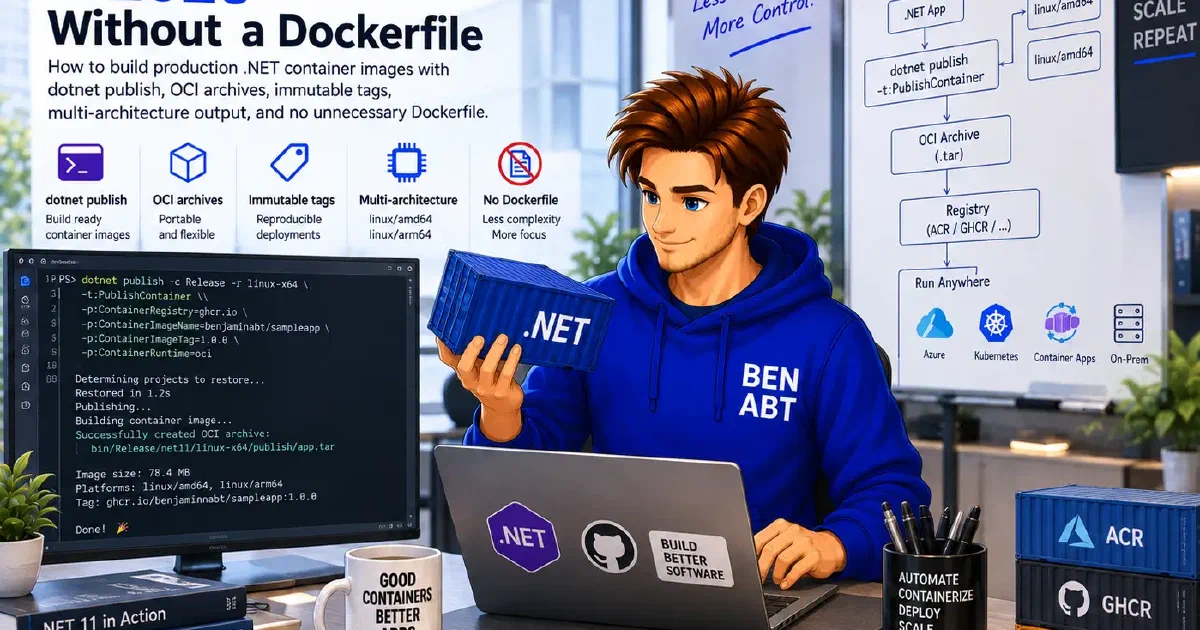
- 11 min read
Containerizing .NET in 2026 Without a Dockerfile
Most .NET Dockerfiles repeat the same five steps: restore, publish, select the matching Microsoft runtime image, copy the output and start …

- 12 min read
Problem Details in ASP.NET Core and .NET 11
builder.Services.AddProblemDetails() registers infrastructure. It does not create an error contract. An ASP.NET Core request can fail during …
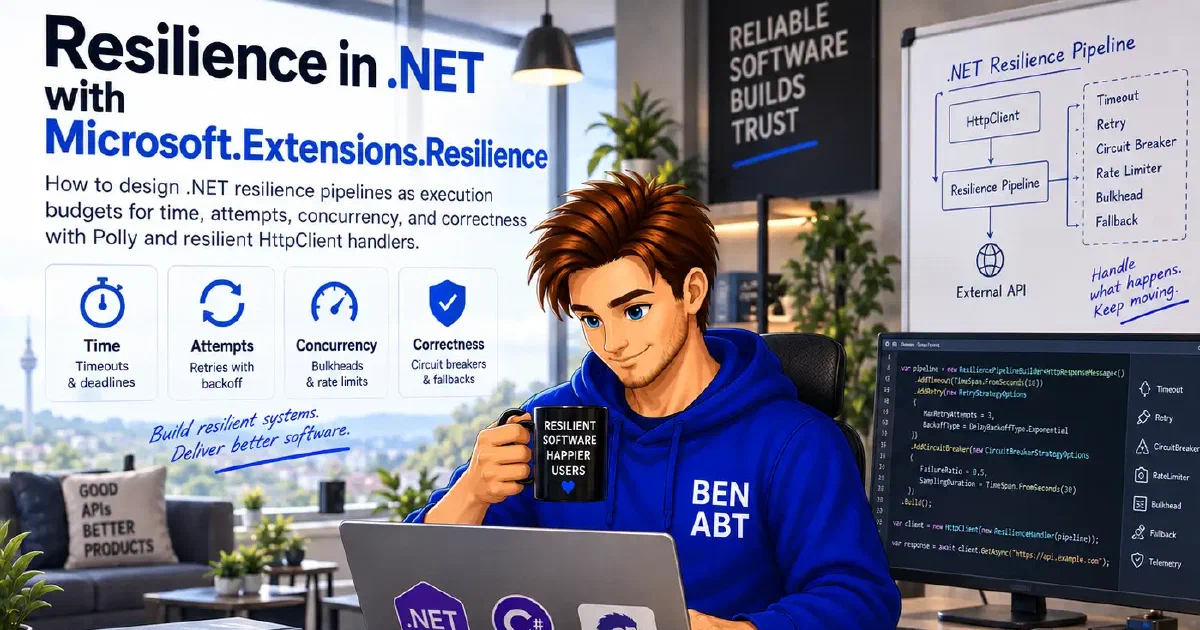
- 11 min read
Resilience in .NET with Microsoft.Extensions.Resilience
Retries are the most visible resilience strategy and the easiest one to misuse. Repeating a failing call can recover from a short network …

BEN ABT
Ben is Chief Engineering Officer and Principal Software Engineer at Medialesson.de, with a strong focus on .NET and Microsoft Azure. In his professional role, he designs and builds highly scalable platforms for hybrid and cloud-based scenarios. He also advises companies and C-levels on migrating to the sovereign cloud.
He runs myCSharp.de, the largest and most active German-speaking C# community forum, actively contributes to both his own and external open-source projects and regularly shares his knowledge through his blog, at community events, conferences and as a writer for technical magazines.
Let's Work Together
Looking for an experienced Platform Architect or Engineer for your next project? Whether it's cloud migration, platform modernization or building new solutions from scratch - I'm here to help you succeed.