GitHub Copilot articles for engineering teams: custom agents, agent skills, instructions files, model choice and practical operating models for .NET, React and Azure projects.
GitHub Copilot changed how my teams write and review code, but the gains depend on how it is set up. This collection covers custom agents, repository instructions, agent skills, migrations driven by Copilot Chat and the operating model that keeps AI-assisted development reviewable.
This workshop helps development teams adopt GitHub Copilot as a reliable part of their daily engineering workflow, rather than an ad-hoc experiment. Participants learn how to write effective prompts, use Copilot Chat for …
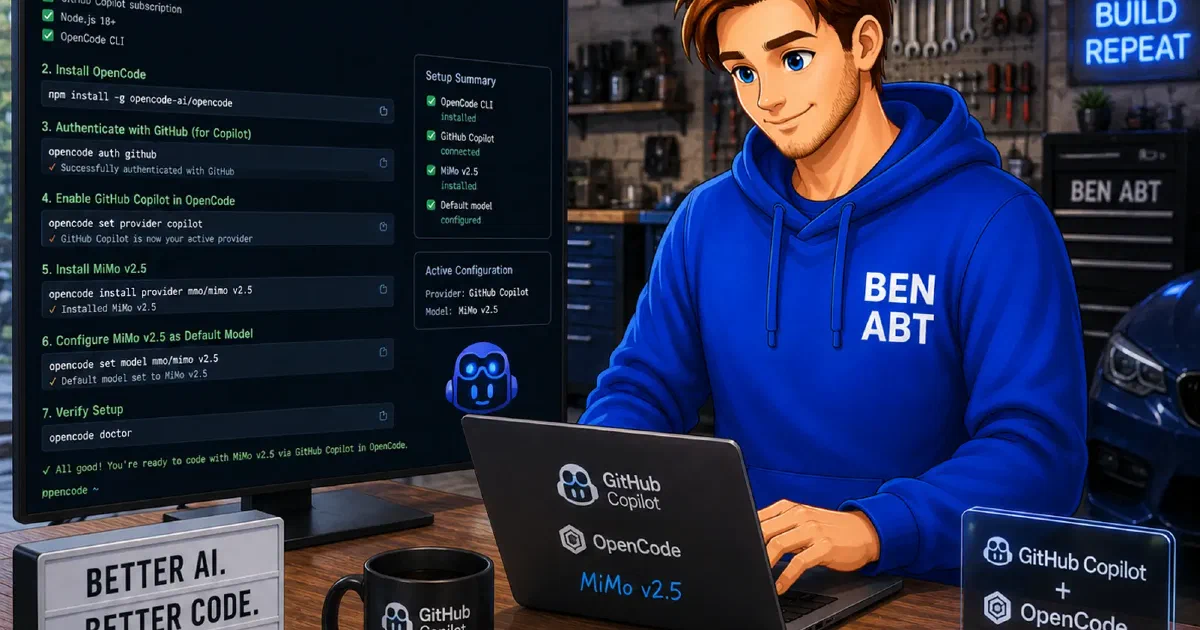
MiMo V2.5 is the latest reasoning and coding model from Xiaomi’s AI lab. Xiaomi positions MiMo as a general-purpose reasoning model with particular strength in code generation, structured output and tool calling. In May …
GitHub Copilot’s pricing shift from flat premium request units to token-based GitHub AI Credits, scheduled for June 1, 2026, changes the economics of heavy AI usage in VS Code meaningfully. Models with large context …
GitHub Copilot is moving into a different cost model. GitHub announced that Copilot plans will transition from premium request units to GitHub AI Credits on June 1, 2026. Usage will be calculated from token consumption, …
GitHub Copilot custom agents allow teams to define specialized AI assistants, each with its own role, tool access and behavioral boundaries. Instead of relying on one general-purpose assistant for everything, a team can …
Large language model agents can appear intelligent while still producing unstable output across runs, contexts and tasks. In practice, this instability is rarely caused by model quality alone. The dominant factor is …
The landscape of AI development is shifting rapidly from simple chat interfaces to fully integrated, agentic workflows like the Ralph Loop . GitHub has recently introduced the GitHub Copilot SDK , a powerful toolkit that …
What if an AI agent could write code, run tests, fix errors and repeat this process autonomously until the job is done? The Ralph Wiggum Method makes this possible with a simple but powerful loop pattern. Named after the …
Look, we’ve all been there. It’s 11 PM, you’ve just fixed a nasty bug and you’re about to commit with “fix stuff” or “update things”. Six months later, you’re staring at your git history wondering what the hell you were …