Blog Posts with tag "Testing"

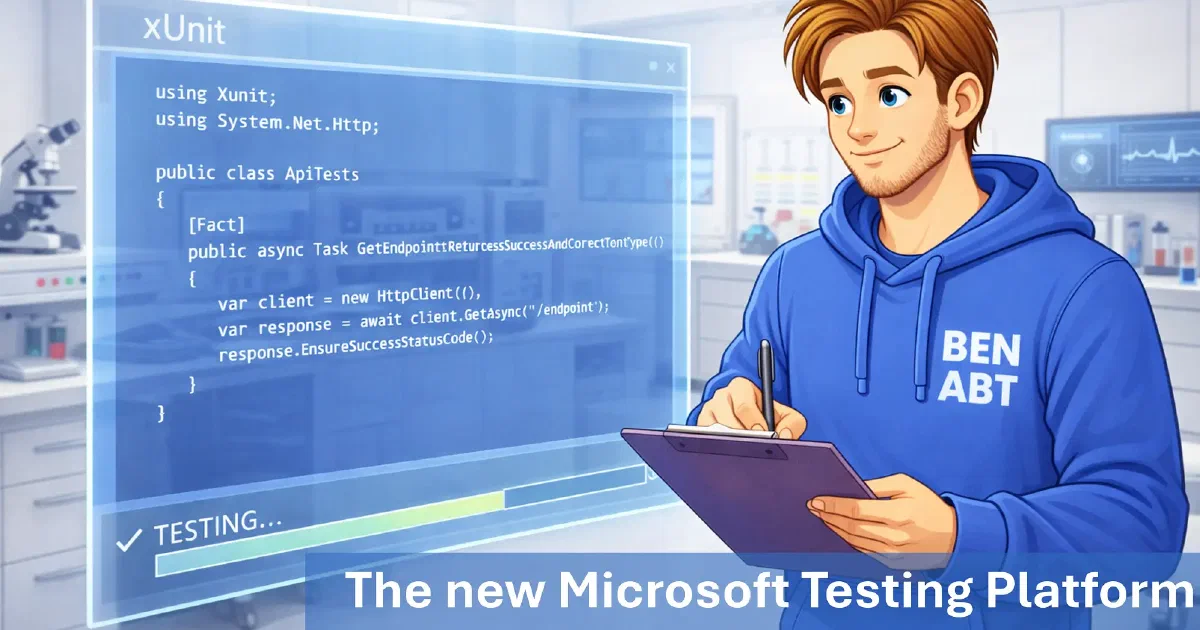
The new Microsoft Testing Platform for .NET: An introduction with practical samples and migration guidance

The new Microsoft Testing Platform for .NET: An introduction with practical samples and migration guidance

Testing in .NET has historically been associated with VSTest. That choice was reasonable for a long time because VSTest offered broad tooling support, deep IDE integration and a familiar execution model for MSTest, xUnit and NUnit projects. But the .NET ecosystem has changed. Native AOT, trimming, simplified deployment models, executable-first workflows and more explicit build-time configuration have pushed the platform toward models that do not fit particularly well with the older test infrastructure.

Read Blog Post
GitHub Copilot - Custom Agents for Full-Stack Teams: A Practical Operating Model for .NET, React and Azure

GitHub Copilot - Custom Agents for Full-Stack Teams: A Practical Operating Model for .NET, React and Azure

GitHub Copilot custom agents allow teams to define specialized AI assistants, each with its own role, tool access and behavioral boundaries. Instead of relying on one general-purpose assistant for everything, a team can create multiple agents that mirror the actual roles in the engineering organization. After working with custom agents for a while, the biggest insight was simple: the quality of AI-assisted engineering improves dramatically once the AI knows what role it is supposed to play.

Read Blog Post
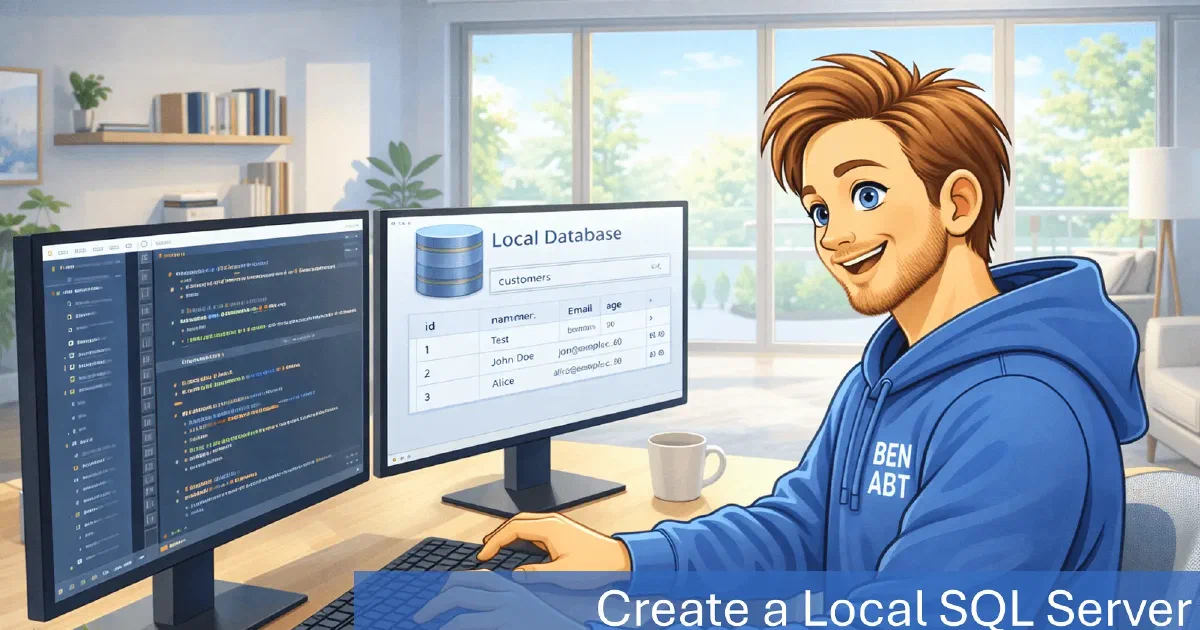
Create a Local SQL Server Database File with .NET

Create a Local SQL Server Database File with .NET

Local SQL Server database files provide a pragmatic way to keep a real SQL Server engine close to the application without provisioning a full server. A LocalDB database lives in a single .mdf file (plus a log file), runs in user mode and behaves like SQL Server for most application scenarios. That makes it a strong fit for local development, integration tests and tooling that needs relational features without the overhead of infrastructure setup.

Read Blog Post